
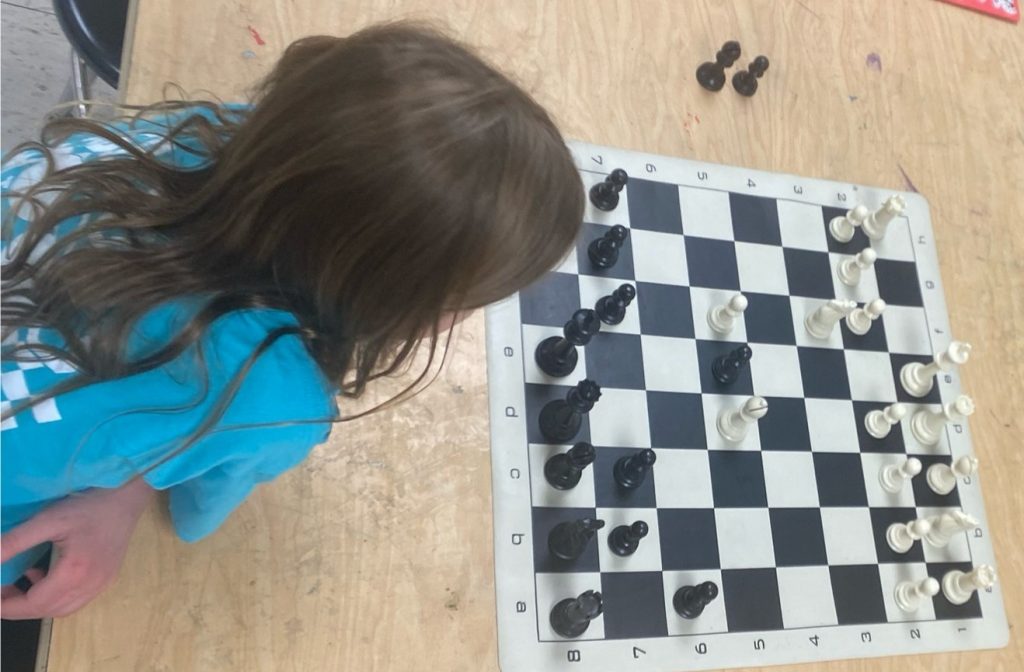
Our first days of the after-school chess programs here in our beloved Milford,
Connecticut were full of energy, curiosity, and a wide range of experience. Some
students arrived eager to jump straight into playing because they said they, “already
know how to play chess,” while others admitted they knew absolutely nothing. We
observed everyone carefully, noted what we saw, and coached the beginners from the
ground up. No matter what their starting point was, each student left this quarter having
learned some new things about chess.
Our newest players focused on learning each piece and how it moves—especially one
of the most famously challenging pieces in chess: the Knight. I imagine this piece may
feel like riding a stubborn horse for the first time: awkward and frustrating until the
movement finally clicks. Students practiced placing pawns on the Knight’s “L-shaped”
landing squares, discovering the patterns through repetition. I feel you have to
experience the pain and frustration of learning to ride that knight—maneuvering it
around obstacles and getting it to its destination—to honestly appreciate what it takes to
command it well.
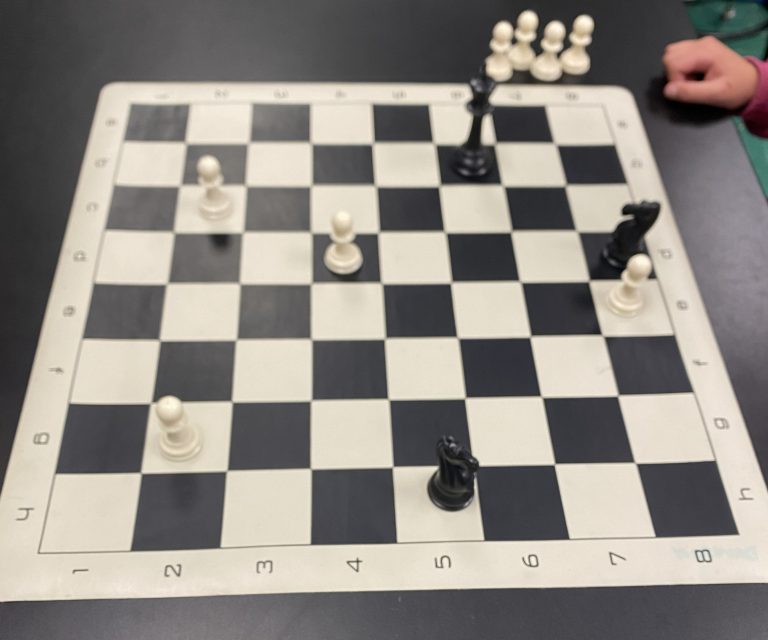
Meanwhile, our more experienced students continued developing exactly where they
needed growth. One student worked closely with Coach David on puzzles and
checkmate motifs, applying deeper strategy and recognizing common patterns that
appear again and again across games.
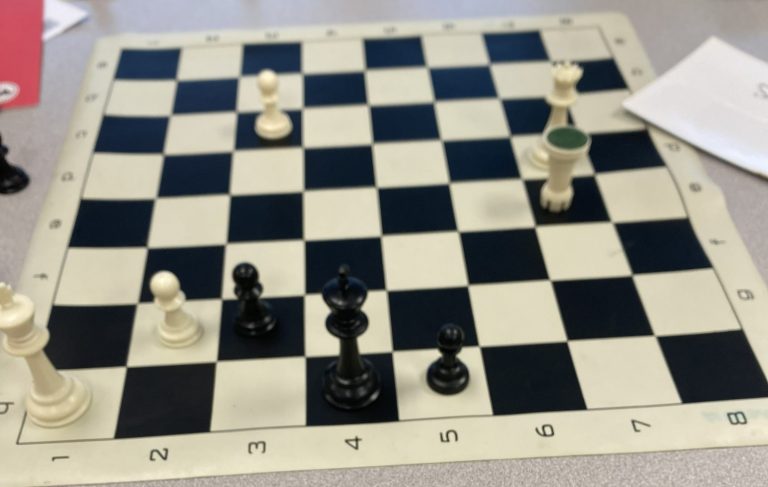
As the weeks progressed, beginners learned the fundamentals of check, checkmate,
and stalemate, while returning students a level ahead explored the three phases of the
game—Opening, Middlegame, and Endgame—along with tactical checkmates such as
two-move, three-move, and four-move combinations. They also started to understand
how to identify and target weaknesses on the chessboard.
We also witnessed beautiful sportsmanship moments throughout the quarter:
✔️ Respectful handshakes
✔️ Students saying, “Good game!”
✔️ Learning from both wins and losses
✔️ Understanding that checkmate—not material—determines the winner
One of our favorite moments came when a beginner naturally developed a fianchetto
structure during a game—a move we had not yet taught, but one the student discovered
instinctively. Moments like these often give us a glimpse into the kinds of choices and
playing styles a student may be drawn to as they continue learning.
Looking ahead, we are excited for the coming weeks as we gather even more
resources, collaborations, and opportunities to serve our wonderful Milford
community—not only children, parents, and grandparents, but others as well. Seeing
our students grow in confidence, strategy, communication, and perseverance reminds
us how grateful we are to be part of the vibrant network of families, educators, and
community partners who make Milford such a wonderful place.
More updates to come soon! ♟️
If you’ve been thinking about introducing a child, grandchild, or even yourself to the
game of chess, we’d love to meet you. Keep an eye out for our after-school chess
programs at your child’s school, register on our Website, or join us for group chess coaching on Monday evenings at 6:00 pm at the Margaret Egan Recreation Center. You can register on the Milford Recreation Website , or on the Services page on The Dawson Chess Academy Website. You can also explore these programs and our one-on-one chess coaching option on our website to find the approach that works best for you and your family.