Mindsets: Chess in Education Pre-Conference Reception
This post continues our Day 1 Pre-Conference Reception reflections, focusing on the voices that shaped the evening.
After the opening remarks and the video, Dawn introduced FIDE Master Sunil Weeramantry, whose deep connection to the school and to scholastic chess shaped everything that followed. Sunil took the stage with a calm and steady presence that immediately drew the room together. He thanked Dawn, acknowledged the community, and then began recognizing individuals in the audience (educators, organizers, contributors) each introduction offered with sincerity and appreciation. Some he invited to the stage to share a few words or to be acknowledged publicly, reinforcing a sense of community and shared purpose.
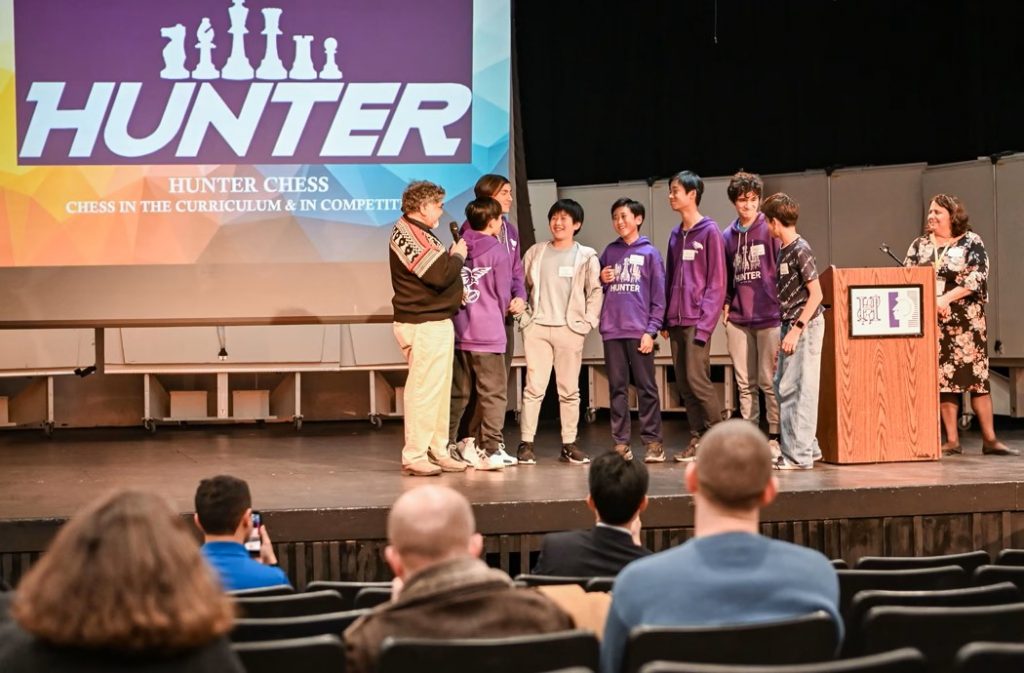
When Sunil invited a group of students onto the stage, the energy shifted in the best way. The children walked confidently to the front, some in their purple team hoodies, others smiling shyly. Their presence reminded everyone in the room why we were there: not simply to discuss chess, but to honor the ways children learn, grow, and discover who they can become.
Among them was a student, the International Master at age 13, on the cusp of a new title. Seeing him standing casually among classmates, not singled out but supported as part of a team, made it clear that excellence here was nurtured through community, not competition alone.
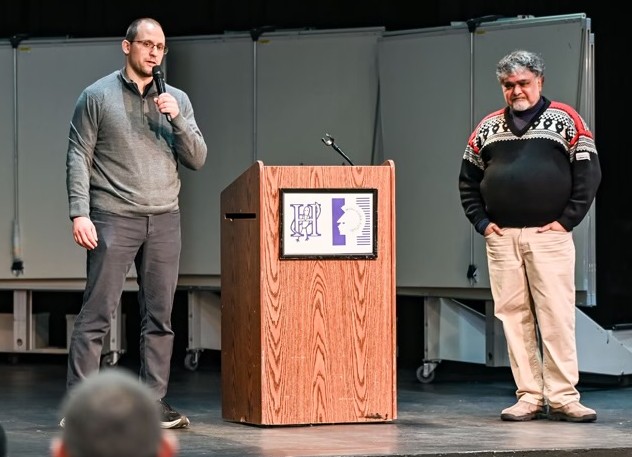
Sunil next invited Matan Prilleltensky, the Executive Director of the National Scholastic Chess Foundation to the stage.
Transcript (excerpted from live remarks during the pre-conference reception):
Matan Prilleltensky, Executive Director, National Scholastic Chess Foundation
“One thing I’ve learned is that Sunil never tells you in advance when he’s going to call you up to speak. So there’s always this element of psychological jeopardy mixed with readiness when you’re sitting in the audience. But I just have to say, it is such an honor to be here.
I actually never taught at Hunter myself, but this school has been such a trailblazer for chess, not just in New York City, but throughout the United States.
I got my start teaching at a school called NEST+m (New Explorations into Science, technology and Math), and I’m almost positive that the chess program there was inspired by Hunter in so many ways. Of course, a lot of those students were then inspired to trade NEST+m for Hunter when they entered middle school, so it’s such an honor to be here at a school I would say started it all.
Hunter inspired so many other schools, not just in New York, but across the country, to see the benefits of chess in education, and what it could do for children. Not just children who play tournament chess.
So many kids simply look forward to their chess class all week, even if they’re never going to play in a tournament.
And I don’t think we would have the understanding we have today of the benefits of chess, or the joy chess can bring to students, if Sunil hadn’t started it all here at Hunter so many years ago.
Sometimes people who don’t know Sunil ask me how to explain him. And I just say, he was kind of the OG of scholastic chess. I think that’s really the best way to explain it.”
Sunil next invited Jeremy Sneider onto the stage, who spoke briefly about his work at Hunter after Sunil and later at another school. His insights that evening were practical and grounded in experience.
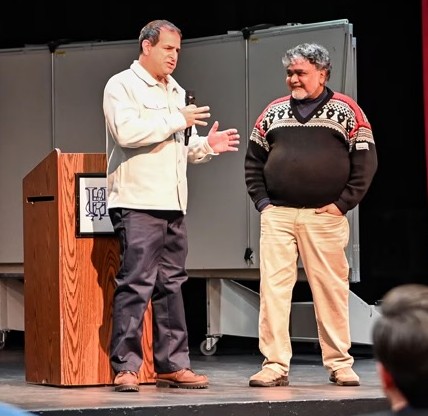
Transcript (excerpted from live remarks during the pre-conference reception):
Jeremy Sneider
Sunil:
“To create this program, the first person I brought on was Jeremy, because we started with kindergarten and first grade…”
[Sunil hands the microphone to Jeremy.]
Jeremy:
“It’s an honor to be here. I started teaching at Hunter over 20 years ago, and it was such a great experience for me. I had only been teaching for a few years at the time, and learning from Sunil, and from all the great chess teachers who worked here in the past and continue to work here, was incredibly formative for me.”
“I took exactly the model I saw from Sunil and applied it to other schools where I taught. I’ve been able to build chess programs using that same model.”
Sunil (interjecting):
“And that have won several national championships.”
Jeremy (laughing, continuing):
“And that have won several national championships, based on exactly that model. The administration trusted me, and I said yes, I’ve got a great plan. Really, I was just stealing Sunil’s plan.”
[They laugh. The audience laughs as well.]
“But it works. It really works. It works here at Hunter and at many other schools. When you have chess in the curriculum, and you go across the whole board with classroom instruction, after-school programs, and tournaments, all of those pieces together give students such a tremendous experience.”
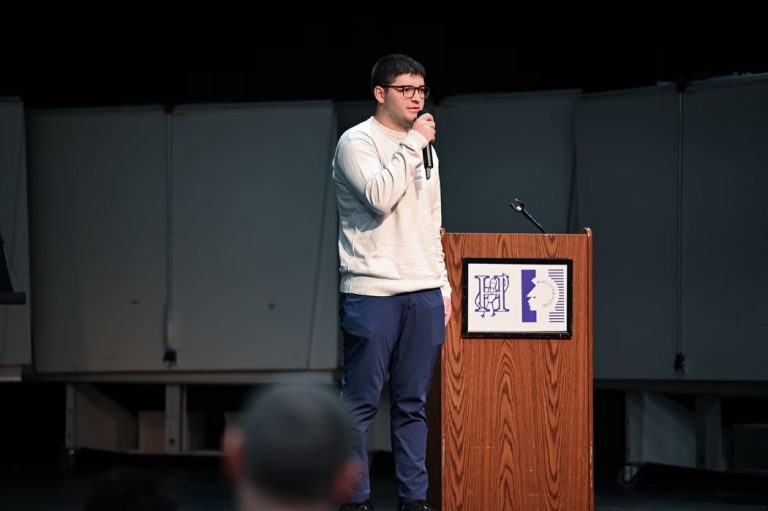
Transcript (excerpted from live remarks during the pre-conference reception):
Sunil next invited Coach Ethan on stage to speak briefly. What he said about chess as
“…part of the kids’ school day. The kids who like it have a lot of opportunity to get better, and they’re really enthusiastic. I think it’s really helpful for everyone. I enjoy seeing the kids progress and going with them to tournaments. All of that is just so rewarding to watch.”
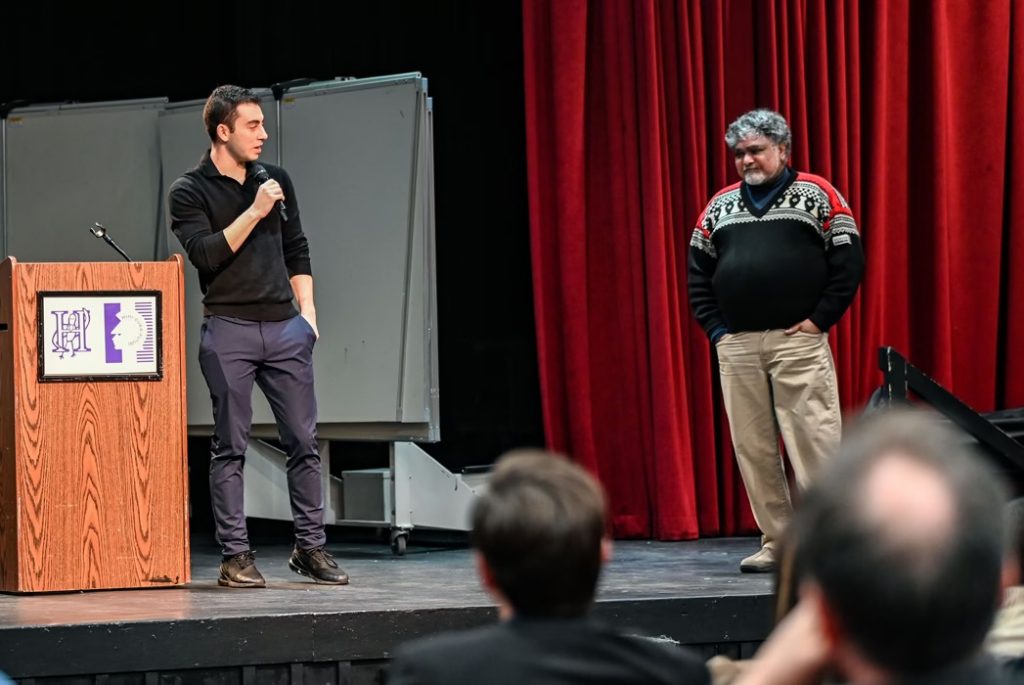
Transcript (excerpted from live remarks during the pre-conference reception):
William Graif, Sunil’s former student and Hunter chess coach
“I had the honor of Sunil being one of my earliest coaches, from about the age of eight through eighteen. Not only that, he also gave me my first job here. I was employed teaching at the Hunter summer day camps and the Sunday tournaments. I was maybe fifteen years old when I started working here.”
“I was not an excellent coach at the time, but it was certainly my most rewarding job. I had what you might call a ‘big boy job,’ but this was especially fulfilling, being able to work with the kids and pass on what I’d learned.”
“More than that, I didn’t go to Hunter myself. I went to Edgemont High School, just my local public school in Westchester. But from Sunil, what I learned was not just chess, it was how to build community through chess.”
“What was especially fulfilling for me at Edgemont was teaching my fellow students and organizing programs from absolute scratch. We won Nationals. We won two State High School Championships. And most importantly, we created a lasting program there.”
“Shout out to Matan. Shout out to the National Scholastic Chess Foundation.”
“So what I learned from Sunil was not just this board game, but how to establish excellent community and purpose through it. Thank you for having me.”