At the Mindsets: Chess in Education Conference
Highlights
This session showed that learning happens through experience and reflection. Games provide structured environments where students can act, receive feedback, and develop their own thinking. When guided well, this leads to deeper understanding than instruction alone.
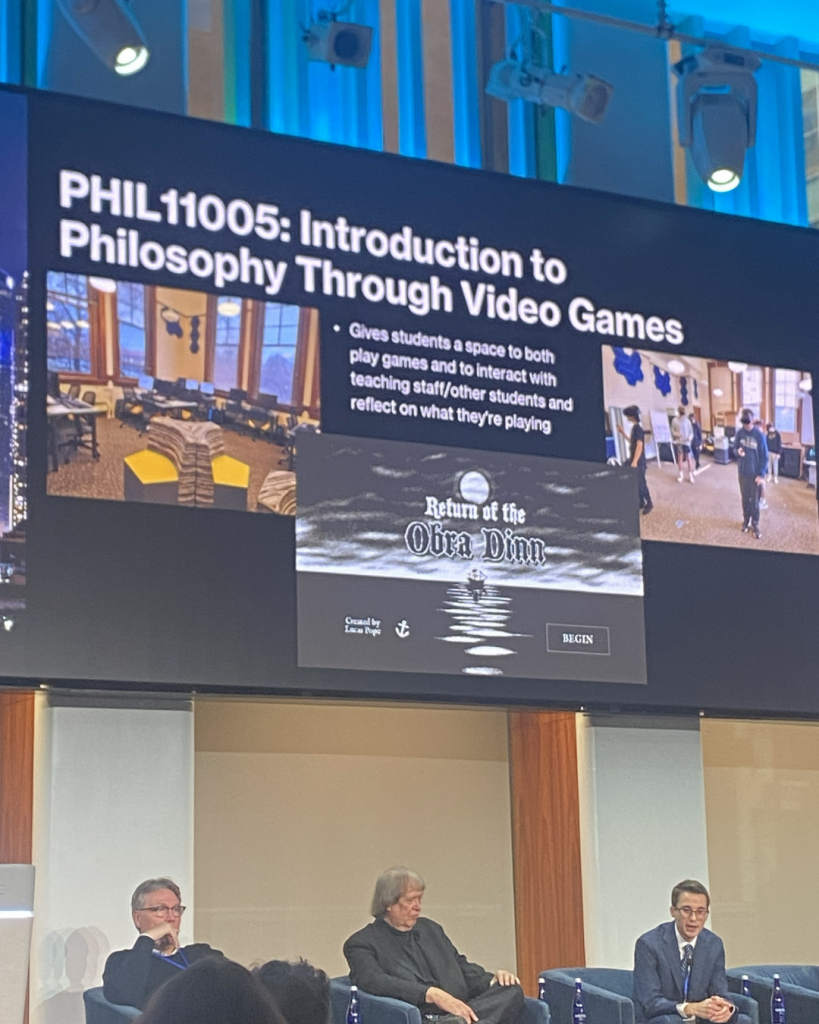
This session brought together two perspectives that, at first, felt different, but ultimately pointed to the same idea.
These are my notes and reflections from this session, based on what I observed and understood in the moment.
Loren Schmidt approached the conversation from lived experience, philosophy, and the nature of learning itself.
Dr. Troy Seagraves showed what it looks like to design that learning intentionally in a classroom.
Together, they offered something deeper than a strategy.
They offered a way of thinking about how learning actually happens.
Starting With Experience
Schmidt spoke about growing up in a community of autodidacts, people who learn on their own, driven by curiosity rather than instruction.
That idea lingered.
Because it suggests that learning does not always begin with being taught.
It often begins with engagement, with interest, with the desire to figure something out.
He also spoke about the phenomenology of skilled human performance, essentially how skill is experienced and developed from the inside, through doing, noticing, and adjusting over time.
Not every student learns the same way.
Not every path looks the same.
What matters is how skill develops from the inside, through experience, reflection, and time.
One story stood out.
He described analyzing a chess position, believing he understood it, then setting it aside for a year. When he returned, he suddenly saw something he hadn’t seen before, a clear path to a win.
That moment became an experiment.
He gave others the same position with different instructions:
- White to play
- White to play and win
And observed how differently people responded.
The question underneath it all:
How do we help people move beyond what they are told, and begin to think for themselves?
Designing for That Kind of Thinking
Dr. Seagraves approached the same question from a different angle.
Instead of starting with theory, he builds environments where thinking is required.
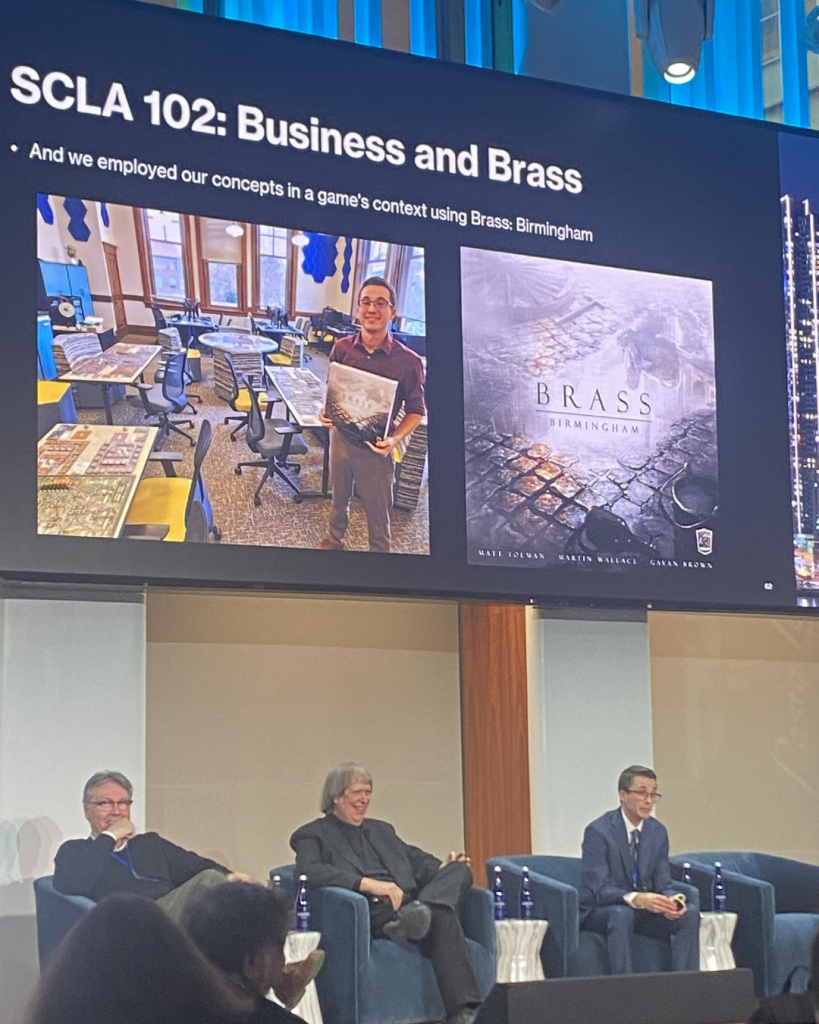
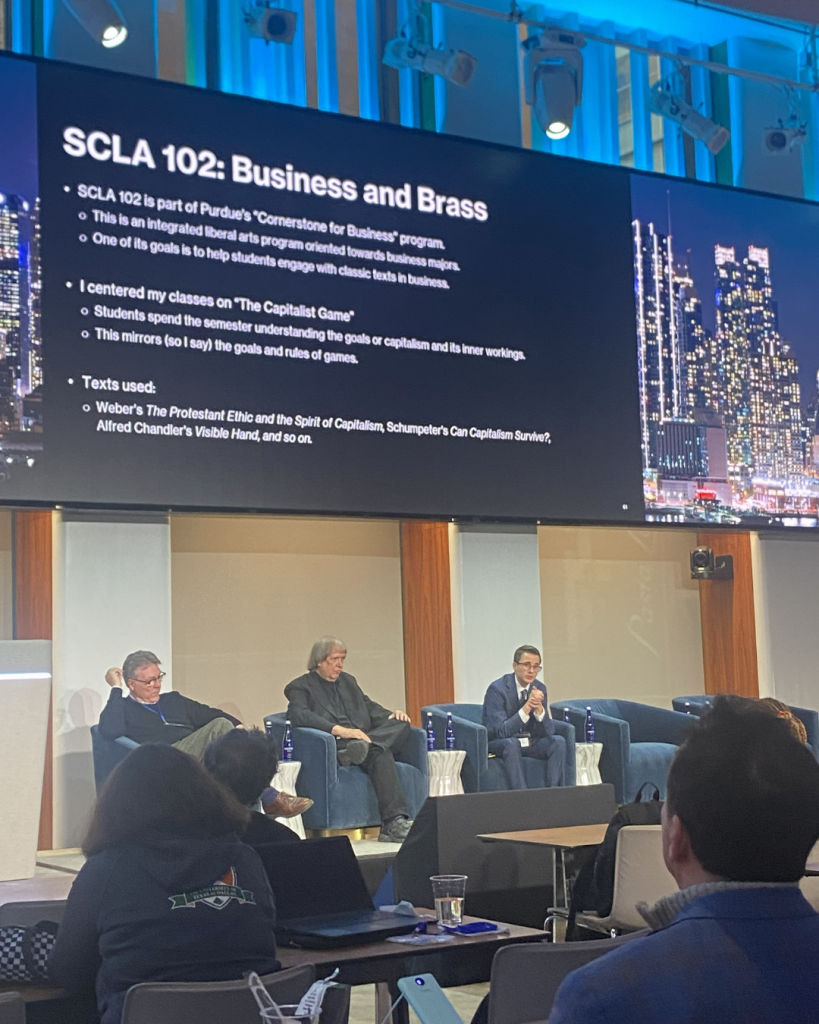
In his classes, students engage with philosophy and business concepts through games.
Not as an add-on.
But as the learning environment itself.
Students play games like Return of the Obra Dinn and Brass: Birmingham, using their in-game experiences to explore ideas about identity, systems, and decision-making.
They are not just reading about concepts.
They are operating inside them.
A Simple Structure with Real Depth
His approach to game-based learning follows three parts.
- Pre-game instruction
Students are guided before they begin.
They learn how the game works, what to expect, and what to pay attention to. The goal is not just to play, but to notice connections between the game and the ideas they are studying.
- In-game learning
During gameplay, support is active.
If students struggle too much, they can become distracted and miss the learning entirely, therefore the instructor, along with more experienced students, helps guide play, correct mistakes, and keep students in a productive learning space.
At one point, students joked that there was “no government player” in the room, and that the instructor had taken on that role, enforcing rules and maintaining the system.
It was a light moment, but it revealed something important.
Structure matters.
Rules matter.
The environment matters.
- Reflection
After the game, students reflect on what they experienced.
They connect their decisions and outcomes back to larger ideas. The game becomes a bridge to understanding.
Feedback Loops and Meaning
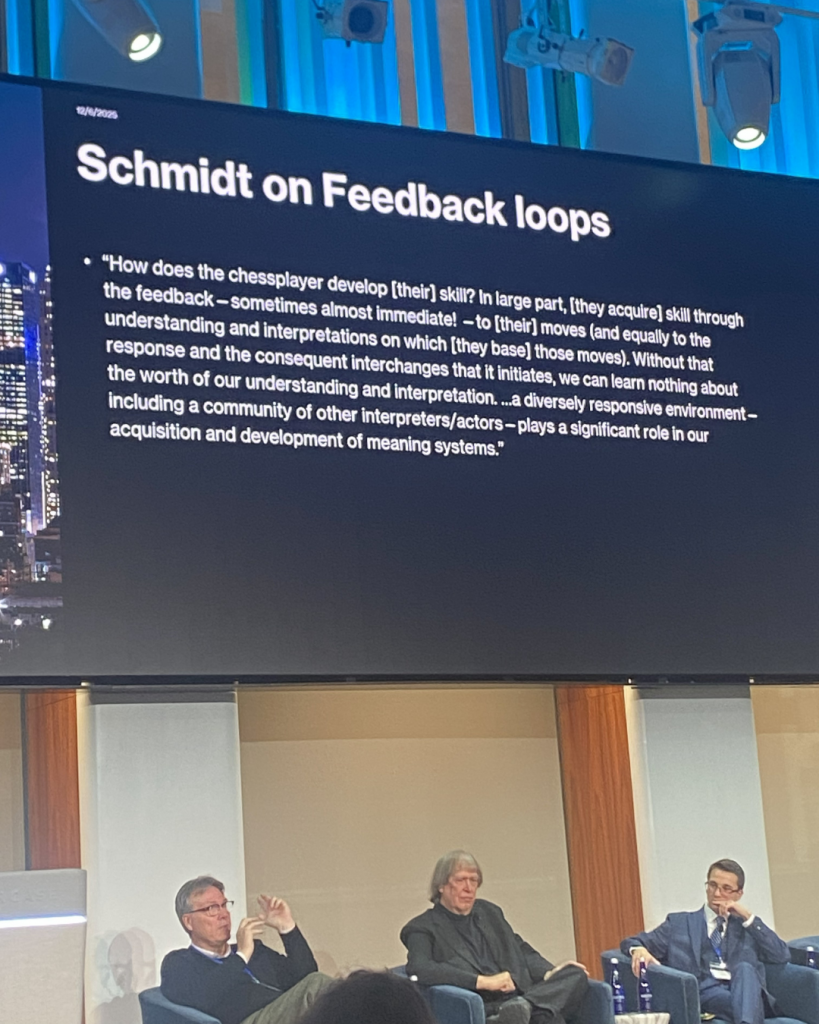
Loren’s perspective and Seagraves’ structure meet most clearly in one idea.
Feedback.
In games, feedback is immediate.
You make a decision.
You see the result.
You adjust.
Without that response, it is difficult to understand whether our thinking holds up.
With it, learning becomes visible.
And when that process happens in a community, where others are also interpreting, responding, and adjusting, it deepens even further.
A Familiar Feeling
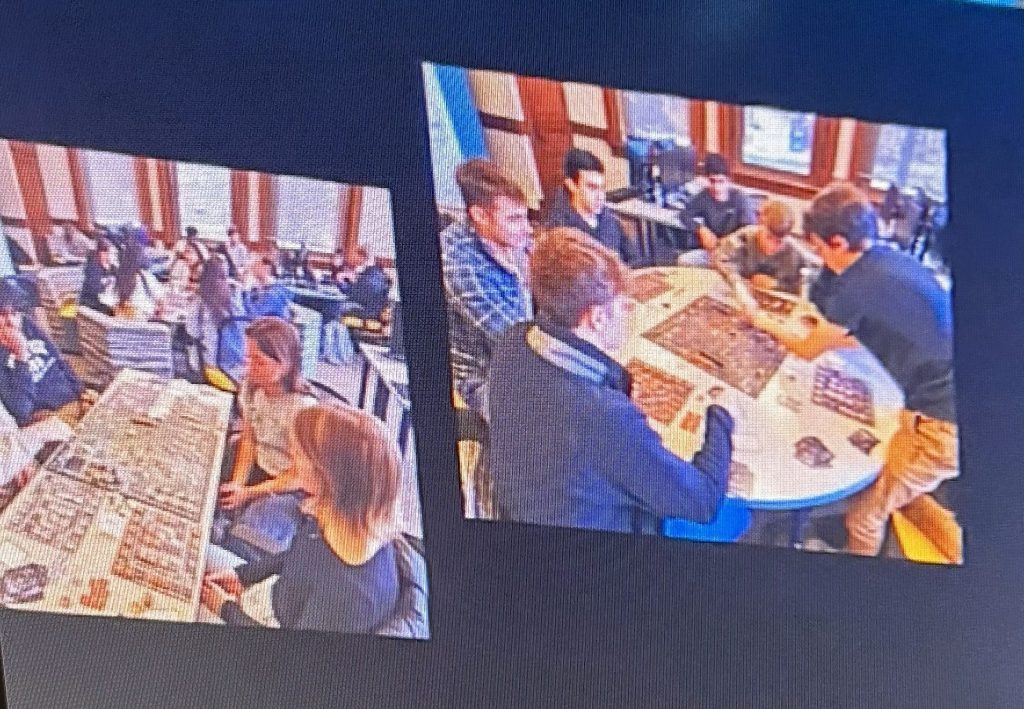
At one point, someone observed that the room looked like a chess club.
Students gathered around tables.
Focused.
Engaged.
Working through decisions together.
It was not just a classroom.
It was a space where thinking was happening in real time.
A Natural Connection to Chess
Watching this, it was hard not to notice the connection.
Chess already creates this kind of environment.
It offers structure.
It provides immediate feedback.
It requires thoughtful decision-making.
And over time, it invites players to move beyond memorization and begin thinking for themselves.
What This Reinforced
Learning does not come from information alone.
It comes from experience, reflection, and the opportunity to test one’s understanding.
Games, when used thoughtfully, create the conditions for that to happen.
They capture attention.
They provide structure.
They generate feedback.
And most importantly, they give learners a space to think.
I’m very much looking forward to seeing how the conference organizers choose to highlight this session as well, because there was a lot here. If I missed anything important I’ll come back here after their highlights are available and share it with you.