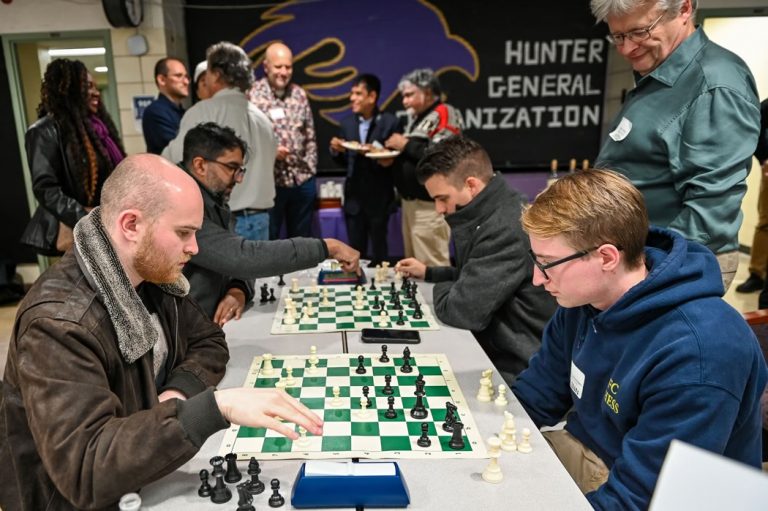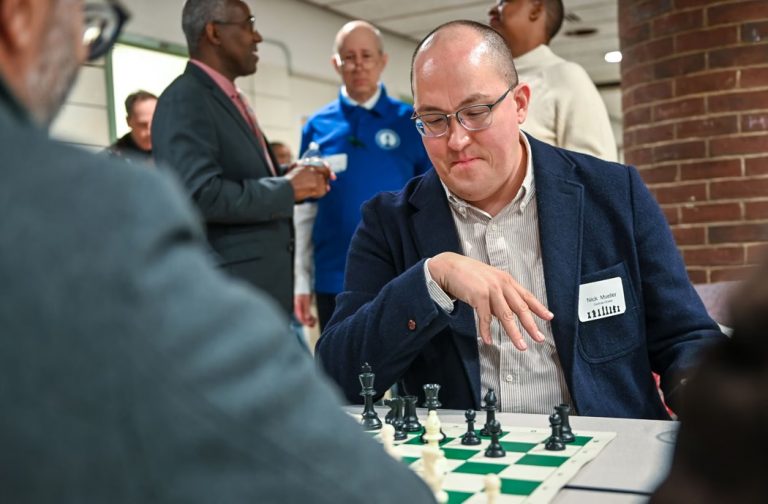
When Loren Schmidt spoke about growing up in a community of autodidacts at the Mindsets: Chess in Education conference, it stayed with me longer than I expected.
It made me think about how I’ve learned throughout my life.
I can trace it back to my earliest experiences.
Watching my parents and copying what they did. Listening to teachers and following instructions in school. Then later, preparing for the 11+ Common Entrance Exam.
I remember how much that preparation mattered.
A small group of us studied together outside of school. Even on weekends. We practiced. We read. We put in time beyond what was required.
When the results came, those of us who had done that extra work performed significantly better. There was also one student who had joined our school just the year before. She seemed to already be far ahead. Looking back, she may have been what Schmidt described as an autodidact.
That pattern continued.
In secondary school, the equivalent of the end of elementary school, when I studied consistently outside of class, my scores were high.
But when I moved, something shifted.
In middle school and high school, it was often enough to repeat what was taught in class. That approach worked. I was categorized as an honor student.
Until college.
I failed discrete math.
That’s when I realized something had to change.
I went back to a different way of learning:
- Reading the material before class
- Trying to understand it on my own first
- Preparing questions
- Getting help on what I didn’t understand
- Going back after class to apply and test my understanding
The difference was clear.
When I expected to be taught, I struggled. When I took ownership of the learning process, I succeeded.
That pattern repeated in statistics. In calculus. After a few cycles, it became natural. And from that point on, the results followed.
What Made Me Wonder
It left me with a question.
Is this how we all learn best?
Not simply by being taught, but by engaging with something ourselves first, struggling with it, and then refining our understanding with guidance.
I see this playing out now in different ways.
Some students resist doing anything outside of what is required. After a full day of school, they feel done. They want a break.
And that’s understandable.
But then there are students who choose to go further on their own.
They study. They explore. They come back with questions.
And the difference in their progress becomes noticeable.
Connecting Back
Schmidt’s point was not that teachers don’t matter.
It was that learning is something that happens from the inside.
Through experience. Through effort. Through reflection.
Games, chess included, create environments where this kind of learning can happen more naturally.
Not because they replace teaching.
But because they invite the learner to participate.
This reflection was sparked by a session at the Mindsets: Chess in Education Conference, which explored how people learn through experience and play.